Railway Post Offices and Hoosier Rail Mail
Indiana was built for railroads. Its flat terrain and central location pulled lines into Indianapolis from every direction, and the capital's Union Station, opened in 1853, is often cited as the first union station in the country. Where the trains went, the mail went with them, and a whole category of postal history grew from that partnership.
What a railway post office was
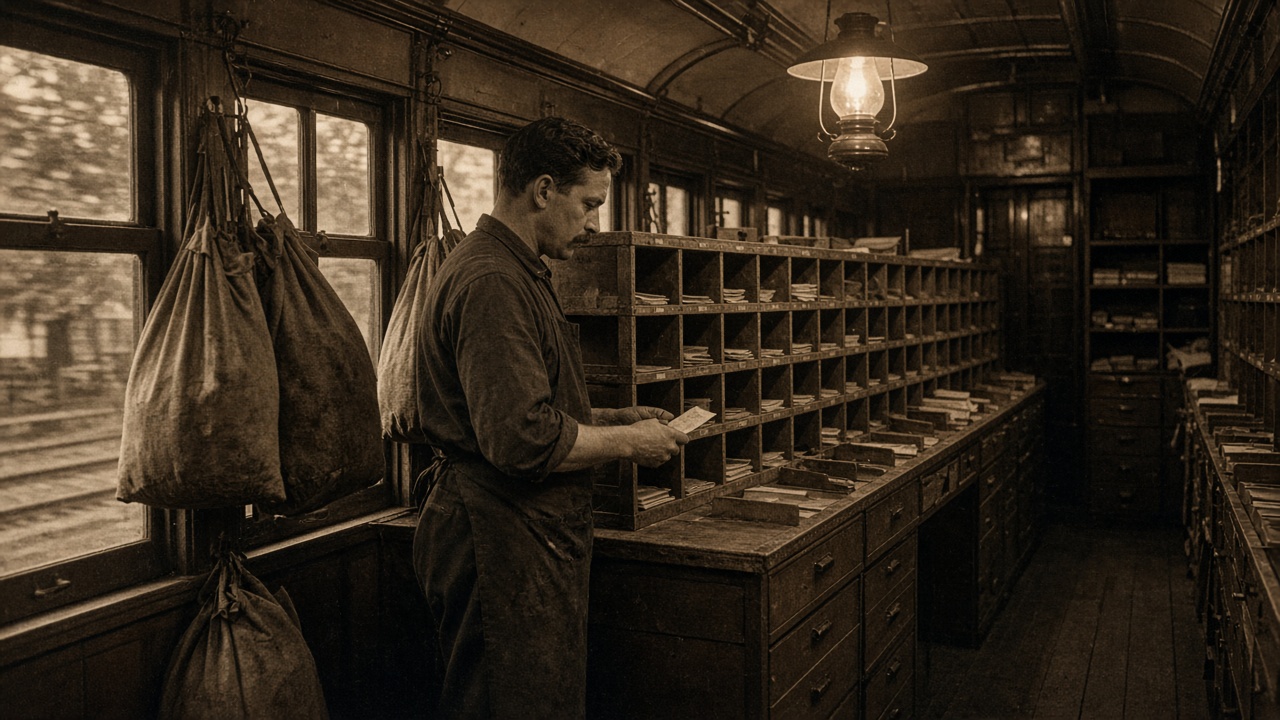
A railway post office, or RPO, was a mail car in which clerks sorted letters while the train was moving. Mail picked up at one town was sorted into bundles for the next stops, so that by the time the train arrived the letters were ready to be dropped. The service became official in 1864 and lasted, in a steadily shrinking form, until 1977.
Route agents and RPO postmarks
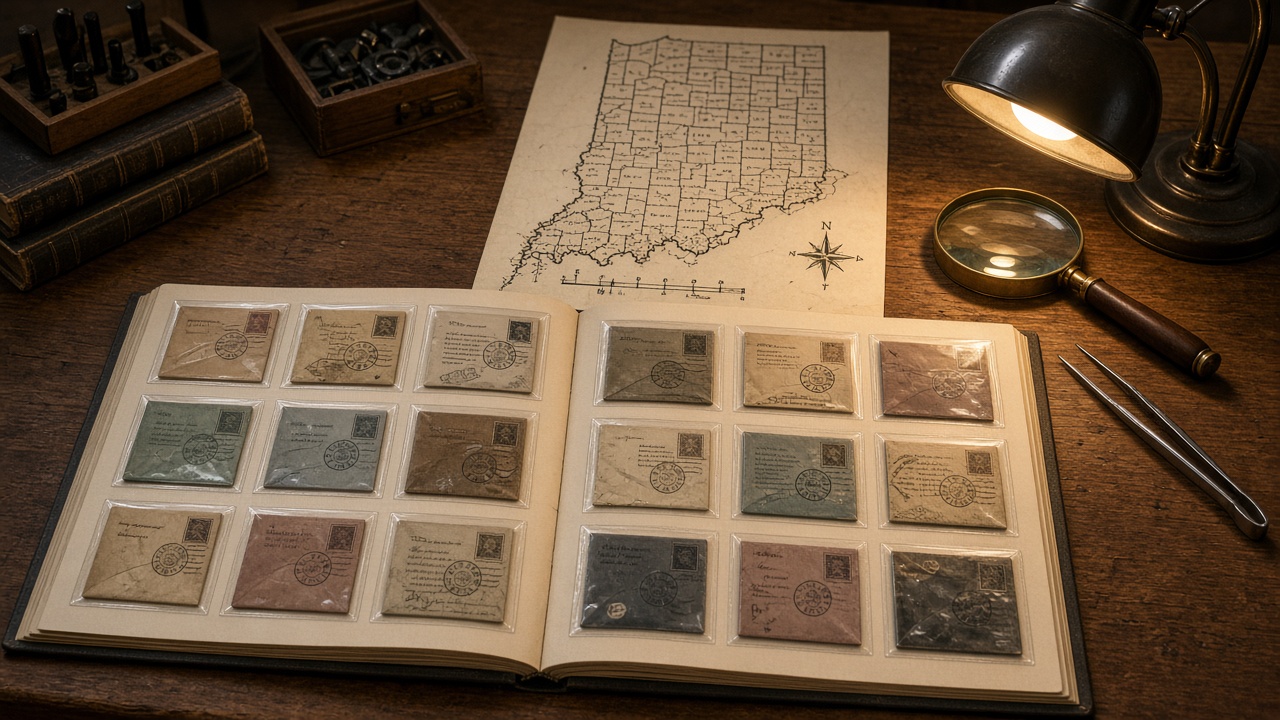
Before the full RPO system, route agents rode trains and handled mail, and their postmarks name the line or the two terminal points. Later RPO postmarks follow the same idea: they typically carry the names of the two terminals, a train number, and sometimes a clerk's code. For example, a cancellation might name two cities that the line connected. Collectors catalogue them by route, and an Indiana collection can be organised entirely by the railways that crossed the state.
Collecting Indiana rail mail
- Route-based. Choose one line, such as a run linking Indianapolis to another city, and collect every marking type it used.
- Town-based. Collect RPO covers that were mailed at or addressed to a single Hoosier town.
- Ephemera. Timetables, mail-car photographs and clerk examination papers are worth keeping beside the covers.
The RPO was a marvel of efficiency, and a bold, clear marking from the age of steam is a handsome piece to hold. Many Indiana towns still carry a depot in their downtown that began its life as a mail stop.