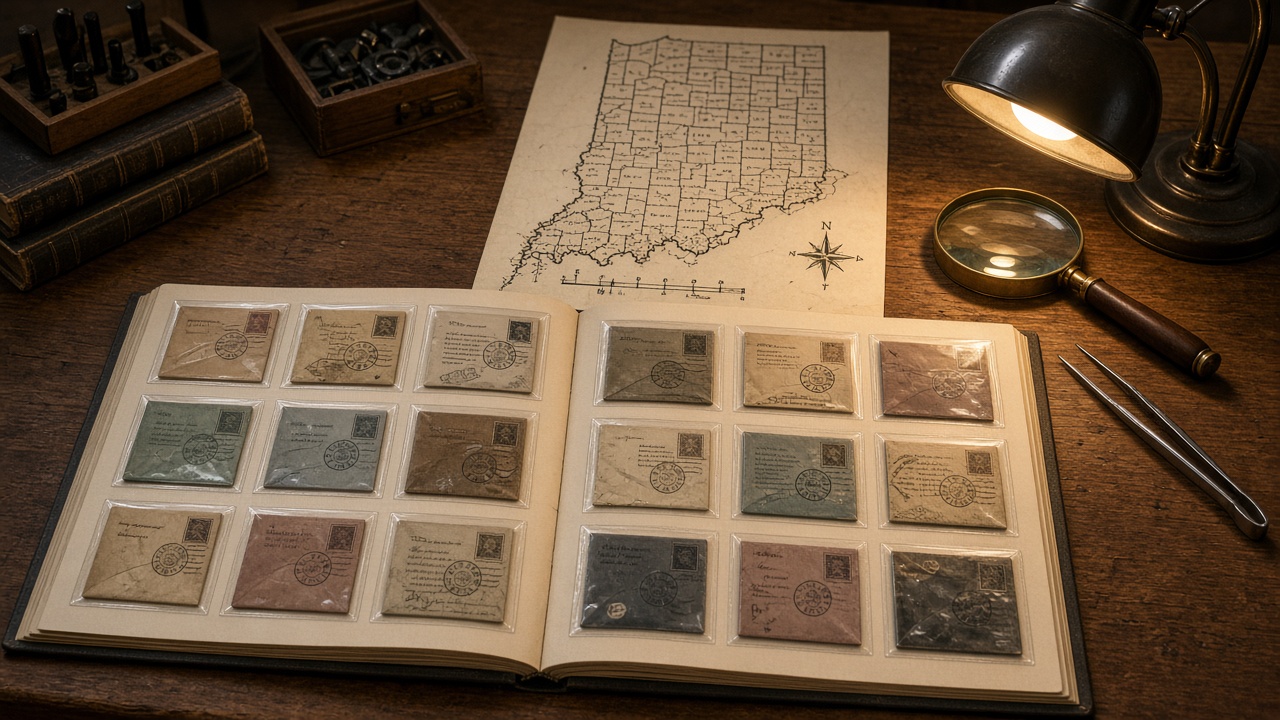
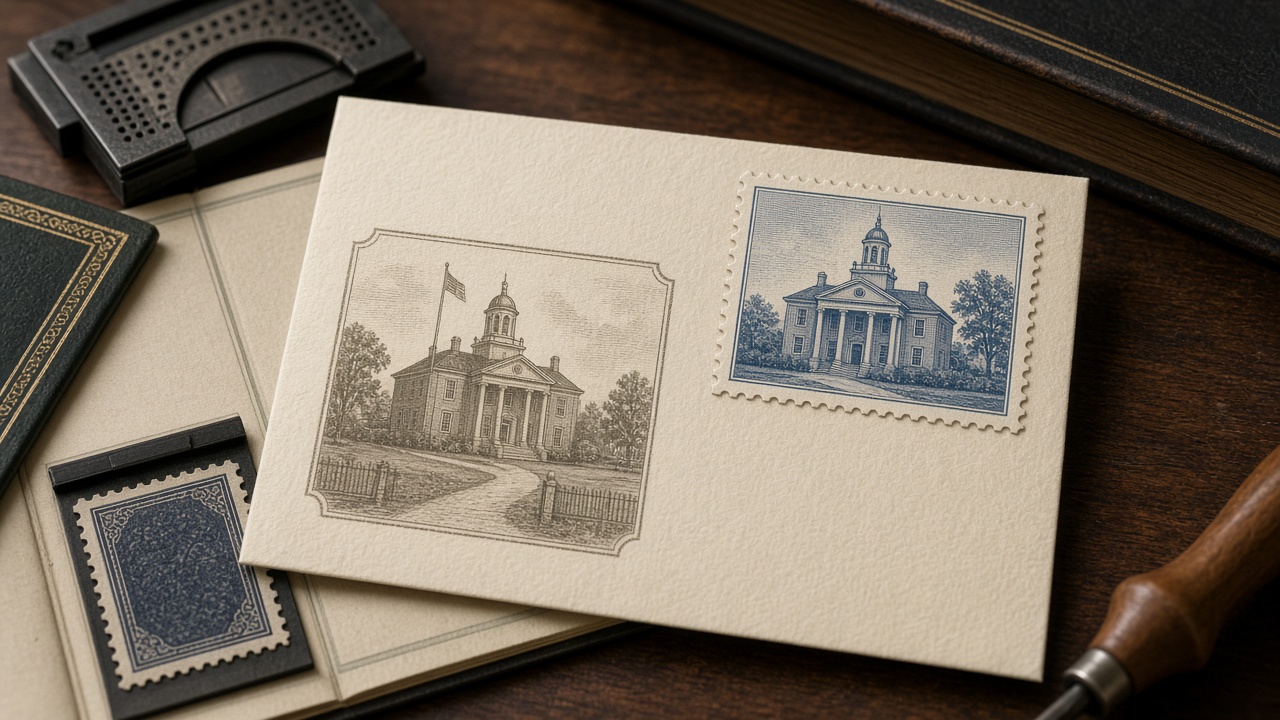
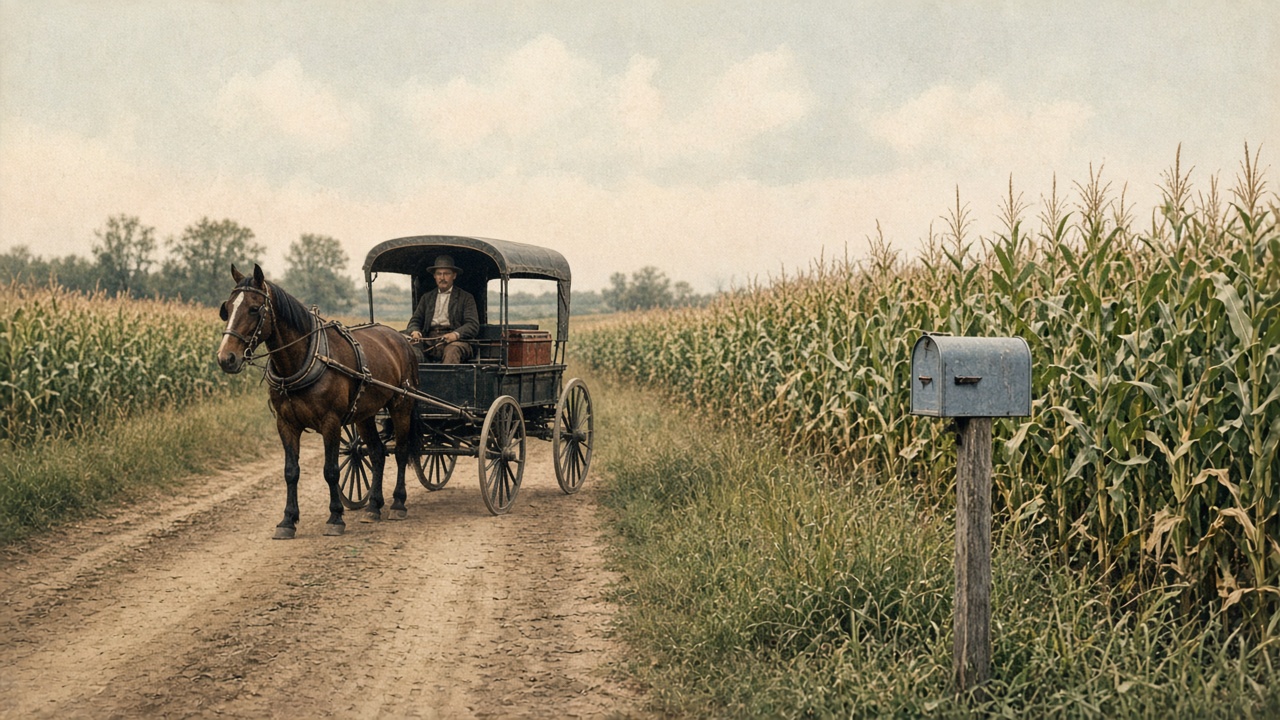
Stampless Covers of Early Indiana: Letters Before the Postage Stamp
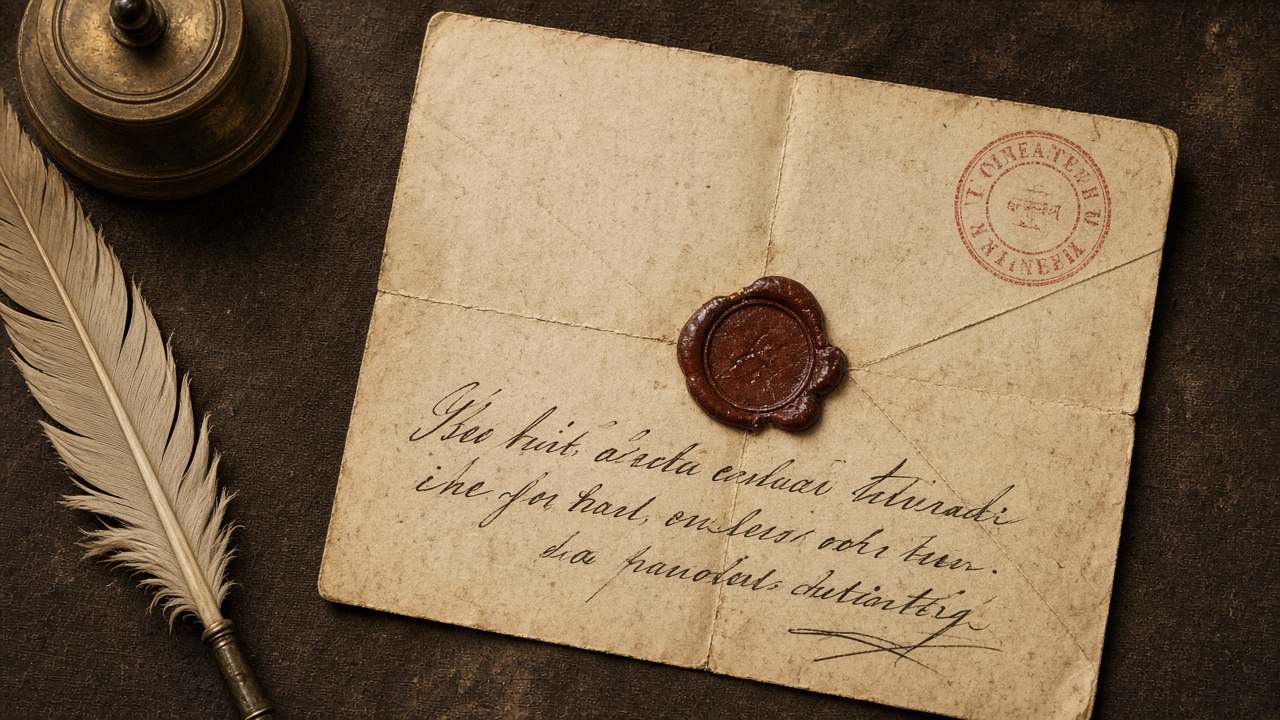
The first thing a new collector of Indiana postal history notices is what is missing from the oldest covers: there is no stamp. The United States did not issue general-use postage stamps until 1847, and for the half-century of Indiana's territorial and early statehood years, a letter travelled as a single folded sheet, sealed with wax or a wafer and addressed on the outside panel. There was no envelope to speak of, and no stamp to pay for it.
How a stampless letter worked
Postage was charged by distance and by the number of sheets. Often the recipient paid on delivery, so the postmaster at the sending office wrote the amount due in ink, usually in the upper right corner. If the sender paid in advance, the clerk marked the cover PAID. Those hand-written rates, together with the town name, are the heart of what collectors call a stampless cover.
What to look for
- Town markings. Many small Hoosier post offices used a manuscript town name and date written by the postmaster. Others owned a small circular handstamp. Both are collectible, and a handstamp from a short-lived office can be scarce.
- Rate markings. Look for numerals such as 6, 10, 12½ or 25 in ink. They tell you the distance the letter was expected to travel, and they let you date a cover even when the letter inside has been lost.
- Territorial and capital towns. Letters from Vincennes, the capital of Indiana Territory, from Corydon, the first state capital, and from Indianapolis after 1825 are the natural anchors of a collection.
- Contents. Because the letter is the cover, the text often records prices, crops, travel conditions and local news. A cover whose contents survive is worth keeping together.
Condition and care
Folded letters are fragile along their creases. Store them flat in an inert polyester sleeve, never tape or glue a tear, and resist the urge to unfold a letter that is already splitting. A small amount of toning, an old wax seal and a bold town marking are all signs of a good example.
Stampless covers are also among the most affordable entry points into Indiana postal history. A common town on a clean cover costs little, yet it carries a direct line to the people who wrote it.