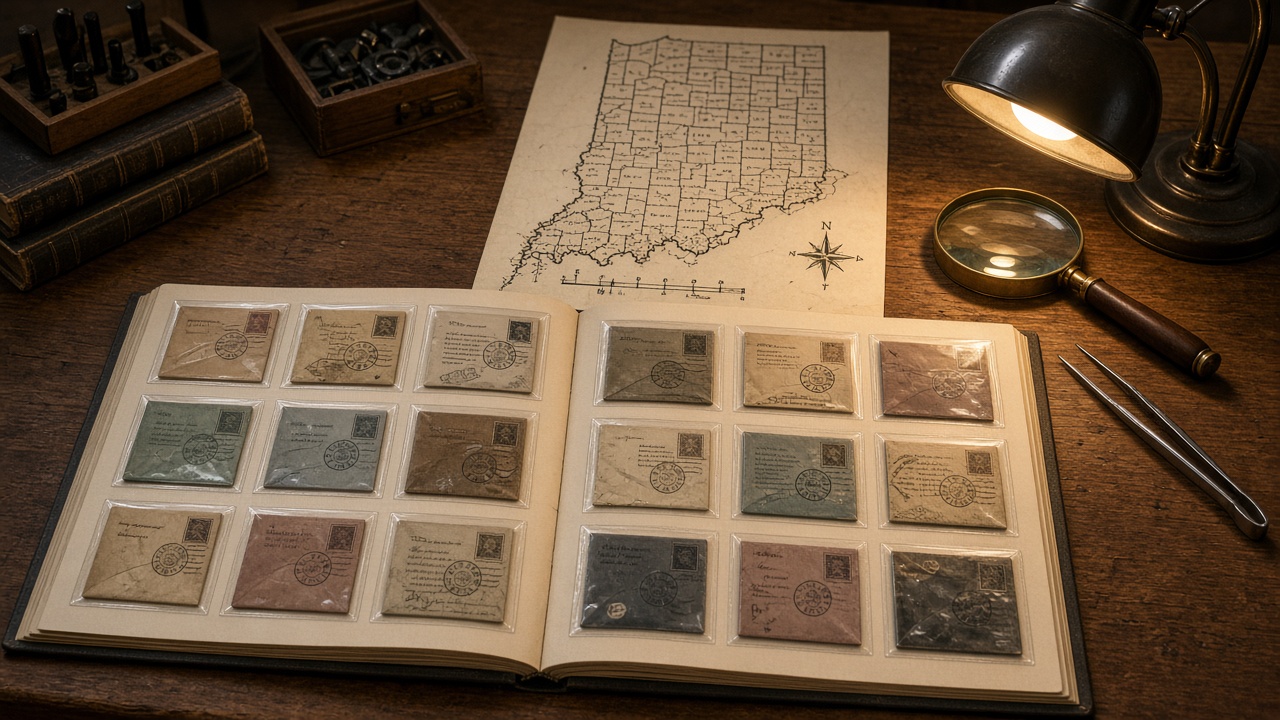
Reading Indiana Town Cancels: Datestamps, Fancy Cancels and Duplexes
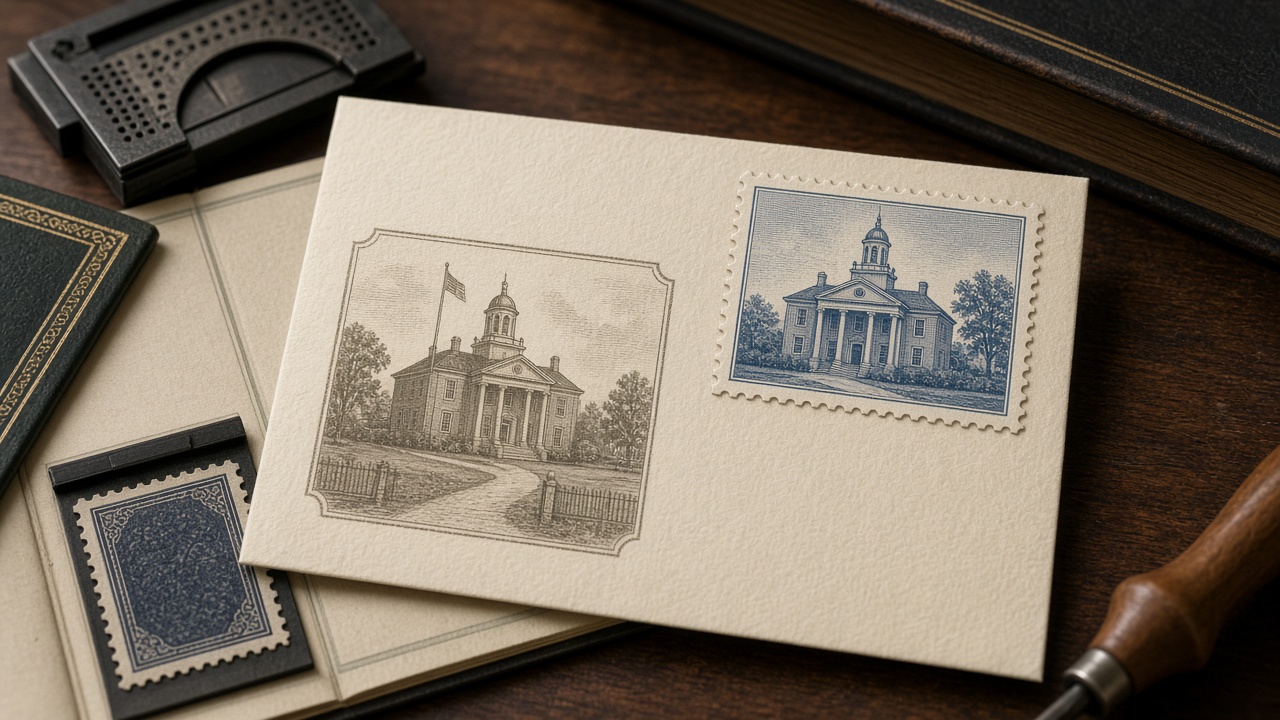
Once postage stamps arrived, every stamp had to be cancelled so it could not be used twice. That requirement gave us postmarks, and for the collector of Indiana postal history, the postmark is the real subject. The stamp is common. The town marking is often what makes a cover special.
The circular datestamp
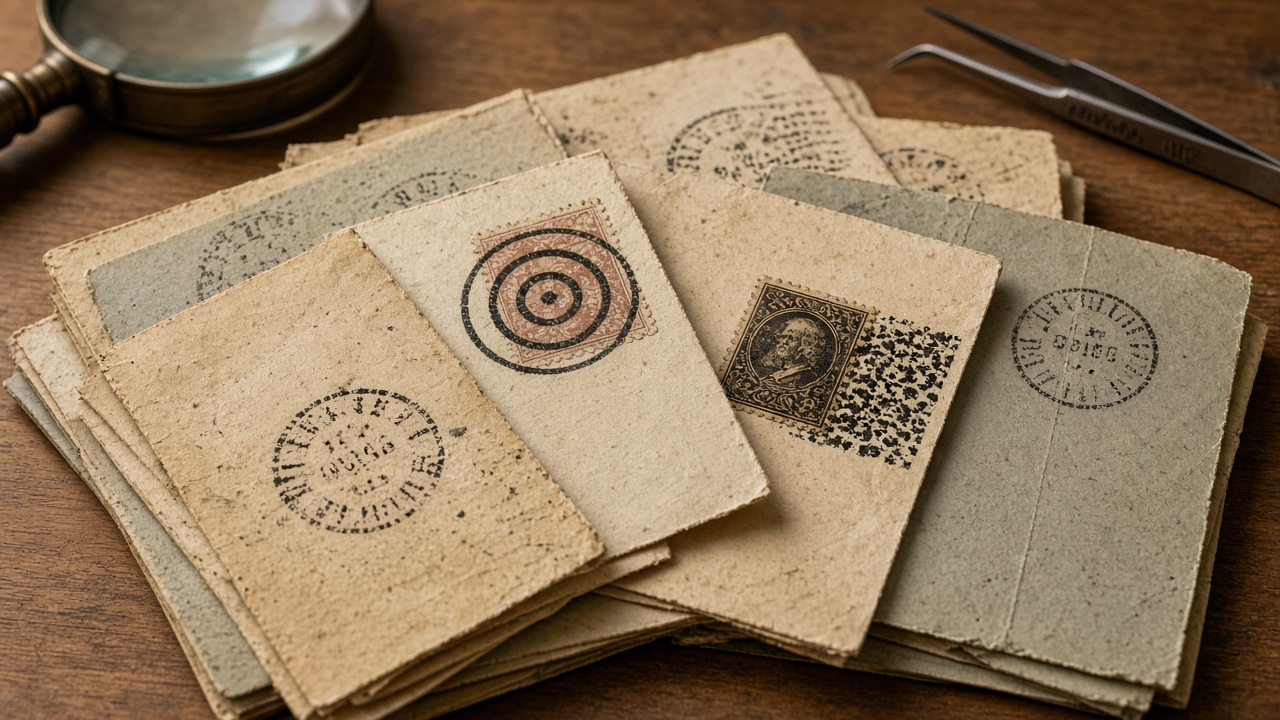
The most familiar mark is the circular datestamp, or CDS: a ring with the town and state around the edge and the date across the middle. Postmasters bought these from suppliers or had them made locally, and the lettering, ring width and type style vary widely. Two covers from the same town can look quite different.
Fancy and killer cancels
Through the later nineteenth century many postmasters used a separate obliterator to kill the stamp. Some were plain bars. Others were hand-cut from cork or wood into stars, wheels, crosses, leaves and geometric shapes. Collectors call these fancy cancels, and small Indiana towns produced some inventive ones.
Duplex and machine marks
A duplex combined the datestamp and the obliterator on one handle so the clerk could strike both in a single motion. Larger offices, Indianapolis chief among them, later moved to machine cancels with slogan or flag designs that sped up the work of cancelling thousands of letters per hour.
Doane and other fourth-class marks
In the early twentieth century, many tiny offices received handstamps of a distinctive pattern, known as Doane cancels, in which the town name sits in a ring or box with the date in the middle. Because those offices were small and many have since closed, a clean Doane mark is a popular goal.
A quick method for reading a mark
- Read the town and state, then confirm the office existed in that year.
- Note the date and compare it to the stamp issue. A mismatch can signal a later use or a philatelic fake.
- Describe the shape: ring size, number of lines, type of killer.
- Write it on the album page in pencil beside the cover.
With practice you will begin to recognise one postmaster's hand from another, and a stack of covers will start to read like a local history.